ENLUXTRA
FOR
NEGATIVE PRESSURE WOUND THERAPY
“Any Negative Pressure Wound Therapy System is really only as good as its dressings."
NPWT System Manufacturer.
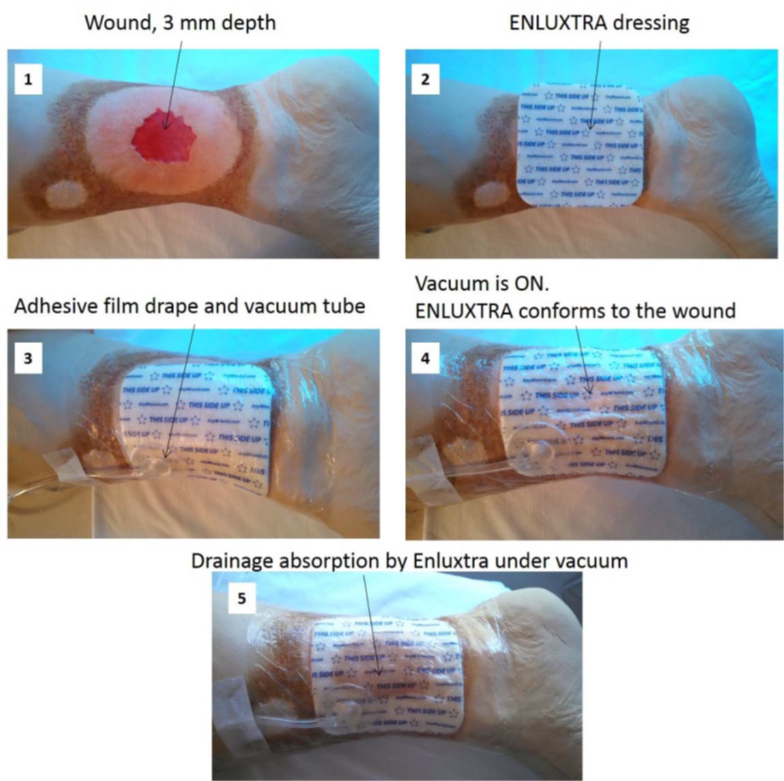
Enluxtra Self-Adaptive Wound dressings have recently been cleared by the FDA for Negative Pressure Wound Therapy (NPWT) using NPWT pumps.
Self-Adaptive Dressings and NPWT synergistically enhance the performance and clinical efficacy of both technologies without adding complexity and costs.
Self-Adaptive Dressings and NPWT synergistically enhance the performance and clinical efficacy of both technologies without adding complexity and costs.
The exudate absorption capacity of Enluxtra dressings is comparable with the canister volume of portable NPWT pumps. That is why Enluxtra is used efficiently with modern miniature canisterless pumps.
Enluxtra enhances NPWT by:
- locking in exudate,
- preventing desiccation and maceration,
- removing slough and microorganisms from the wound,
- hydrating low-exuding and dry wounds,
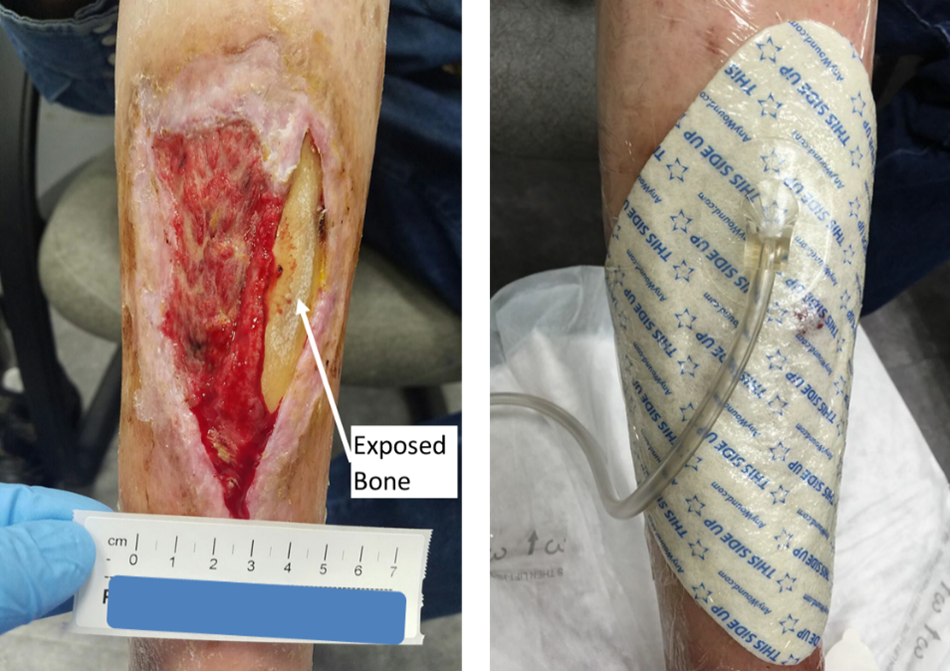
- extending the use to wounds with bare bone or tendon,
- reducing wound pain,
- stopping accidental excessive bleeding.,
- allowing intermittent use of negative pressure, temporal vacuum disconnection, or drape airtightness loss without sacrificing removal of the exudate.
- helps Enluxtra fully conform to wound topology, preventing uncontrolled gaps between the wound and dressing,
- pulls wound edges together for faster healing.
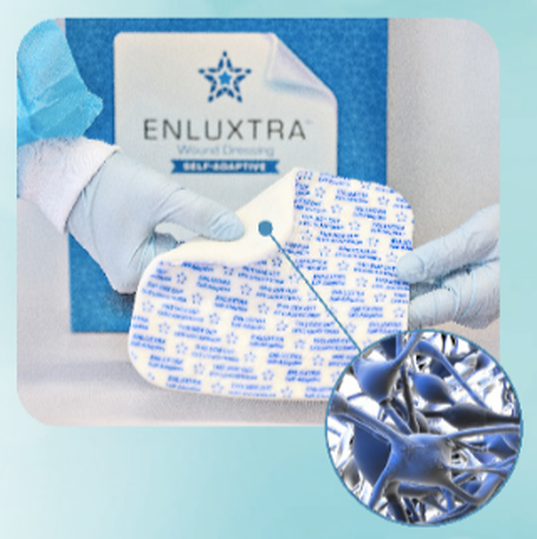
Enluxtra dressings have high absorption and exudate locking in capacity and do not collapse under negative pressure due to the 3D super-absorbent matrix structure. The 3D matrix structure allows air and fluid passage even at maximum dressing swelling and does not have gel blocking problems.
Enluxtra dressing NPWT kit consists of:
Enluxtra dressings are stackable for achieving twice or triple higher absorption capacity for heavily exuding wounds.
Application of Enluxtra dressing NPWT kit is similar to conventional NPWT dressing kits with foam or gauze.
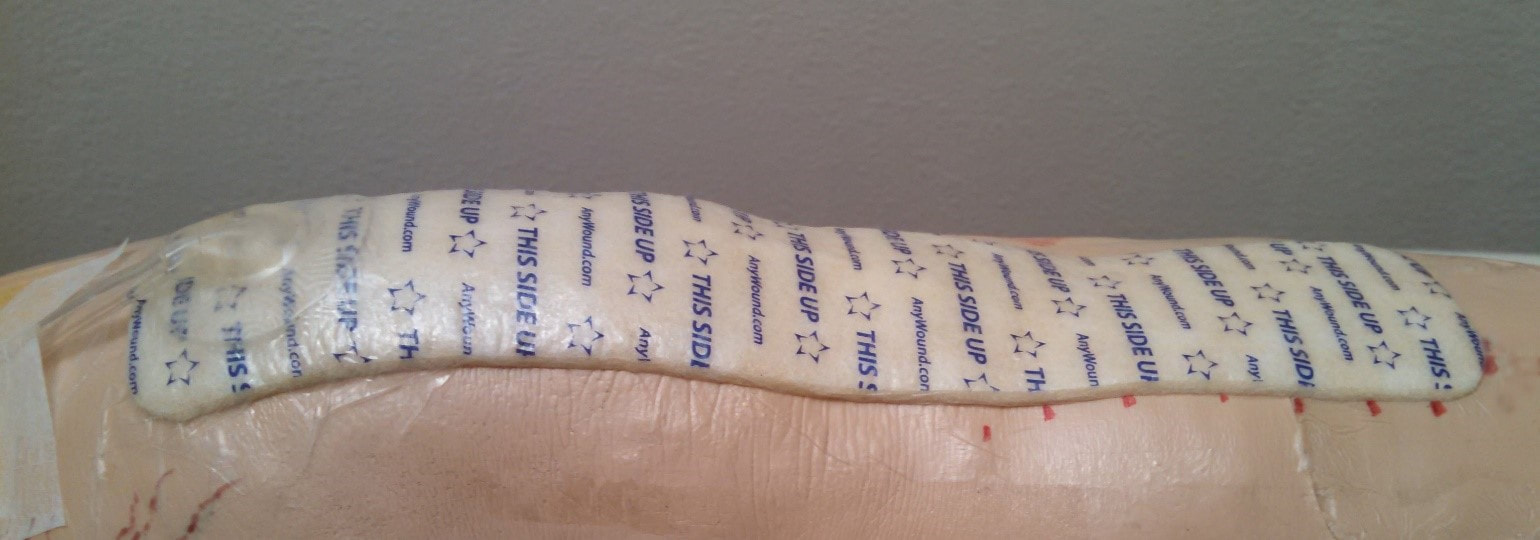
- Enluxtra dressing, square size 4”x4” or 6”x6” for healing by secondary intention, or a strip 2”x8” for surgical incisions.
- Adhesive vacuum drape
- Vacuum port with tubing.
Enluxtra dressings are stackable for achieving twice or triple higher absorption capacity for heavily exuding wounds.
Application of Enluxtra dressing NPWT kit is similar to conventional NPWT dressing kits with foam or gauze.